Peptide calculator
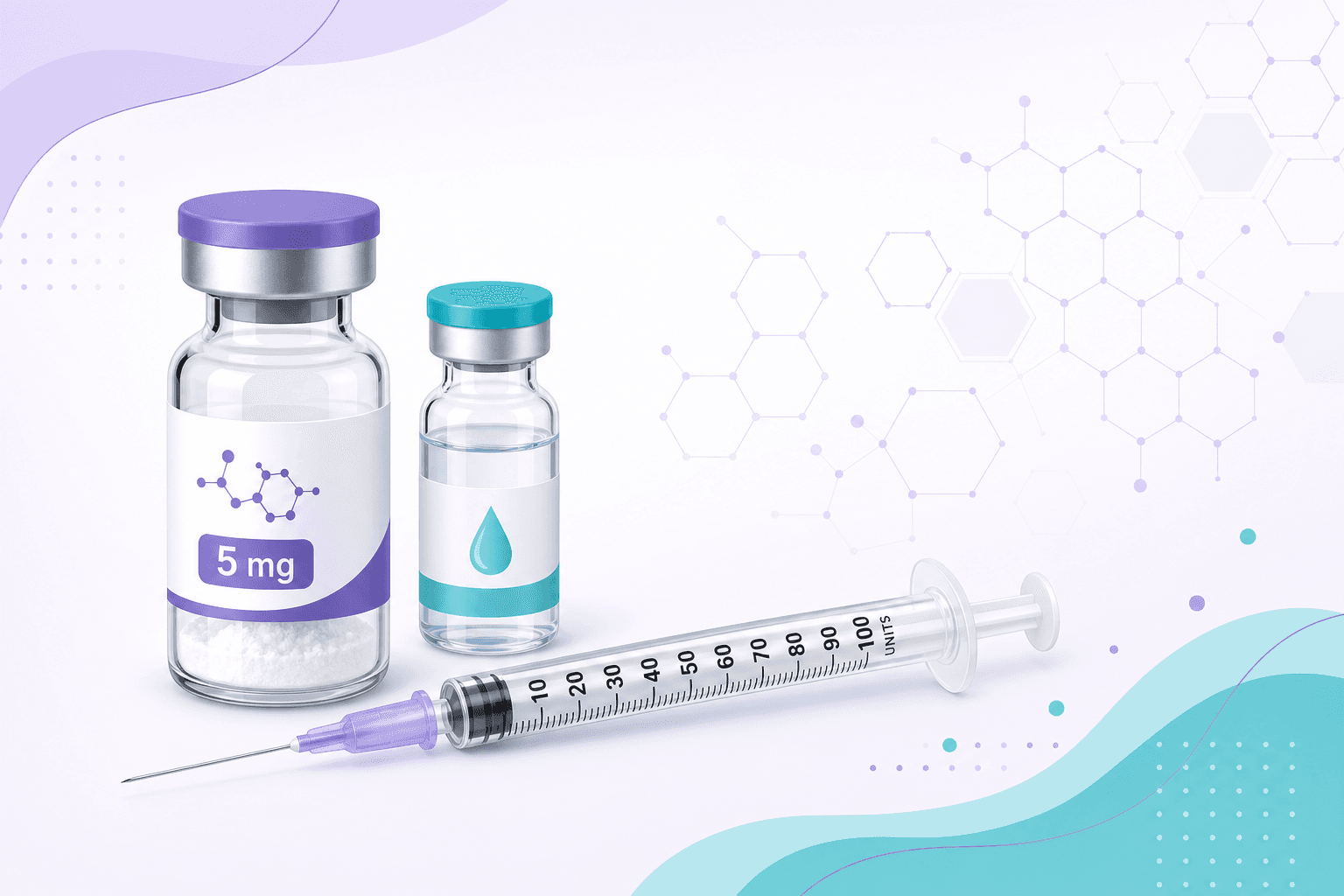
Calculate peptide reconstitution and syringe draw volume like a draw-and-dose calculator. Enter your desired dose, vial strength, and bac water to get U-100 insulin syringe units, mL to draw, and mg/mL concentration.
FAQ for this calculator
- How do syringe units work?
- On a U-100 insulin syringe, 100 units equals 1.0 mL. So 15 units = 0.15 mL.
- How is concentration calculated?
- Divide total peptide mg by bacteriostatic water mL. Example: 5 mg in 3 mL → 1.67 mg/mL (1,667 mcg/mL).
- mcg vs mg?
- 1 mg = 1,000 mcg. Vial labels are usually mg; per-injection doses are often quoted in mcg.
- Is this the same as Prime Peptides calculator?
- Same core math: dose, vial strength, and diluent volume → syringe draw and concentration. Always verify with your supplier and protocol.
How to use the peptide reconstitution calculator
After mixing lyophilized peptide with bacteriostatic water, concentration is total mg divided by mL. Each dose needs enough solution to deliver your target mcg.
- Enter desired dose in mcg (or tap a preset—0.25 mg = 250 mcg).
- Enter vial peptide strength in mg.
- Enter bac water volume used for reconstitution.
- Read syringe units (U-100), mL to draw, mg/mL concentration, and doses per vial.
When to use this calculator
- 5 mg vial + 3 mL water + 250 mcg target dose (classic BPC-157 style setup).
- Comparing 2 mL vs 3 mL diluent before committing to a protocol.
- Checking how many injections one vial yields at your dose.
Examples & walkthrough
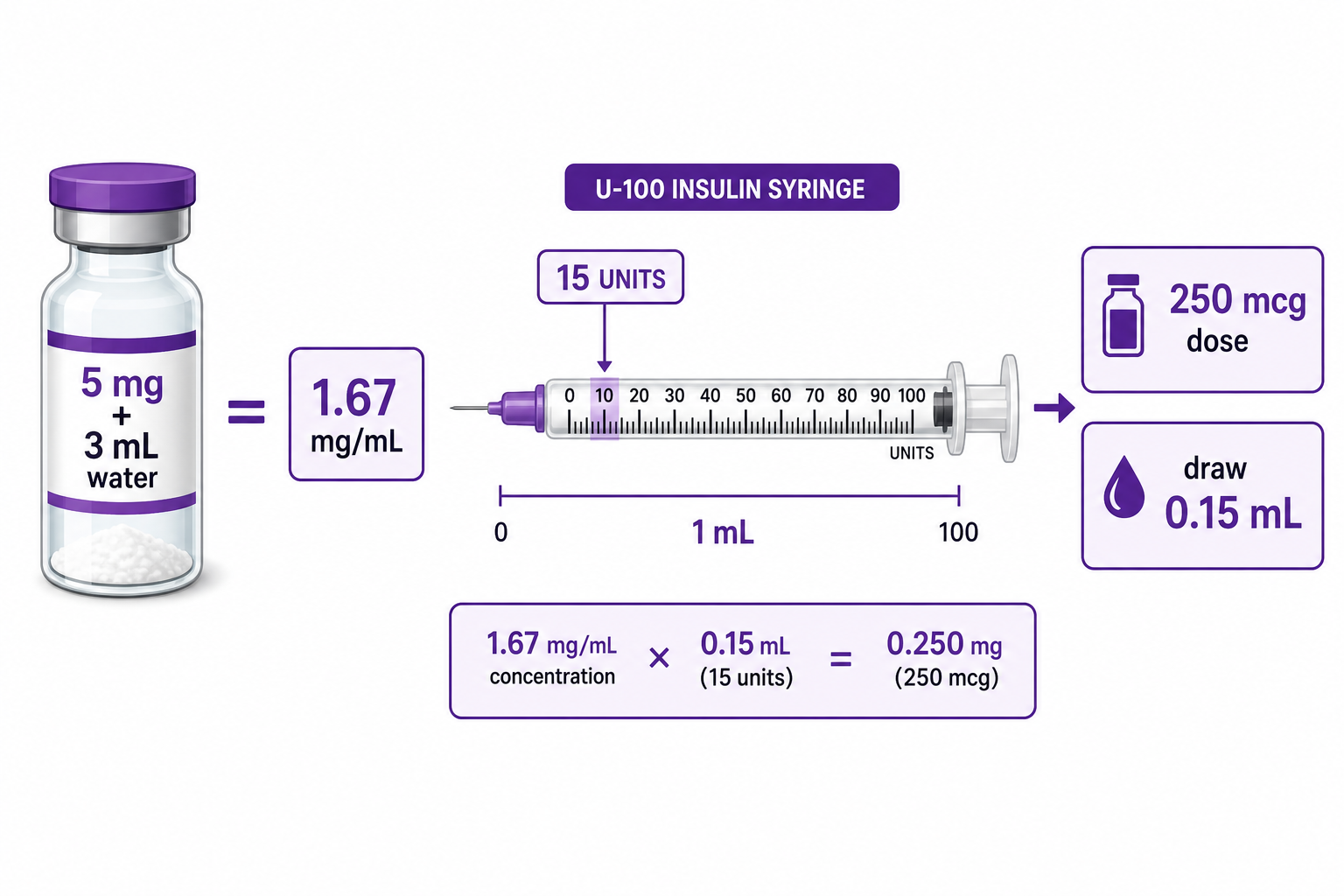
- 5 mg peptide, 3 mL bac water, 250 mcg dose → ~1.67 mg/mL, draw 0.15 mL = 15 syringe units, ~20 doses per vial.
- 10 mg vial, 2 mL water, 500 mcg dose → 5 mg/mL → 0.1 mL = 10 units per dose.
- 1 mL = 100 units on a standard U-100 insulin syringe.